
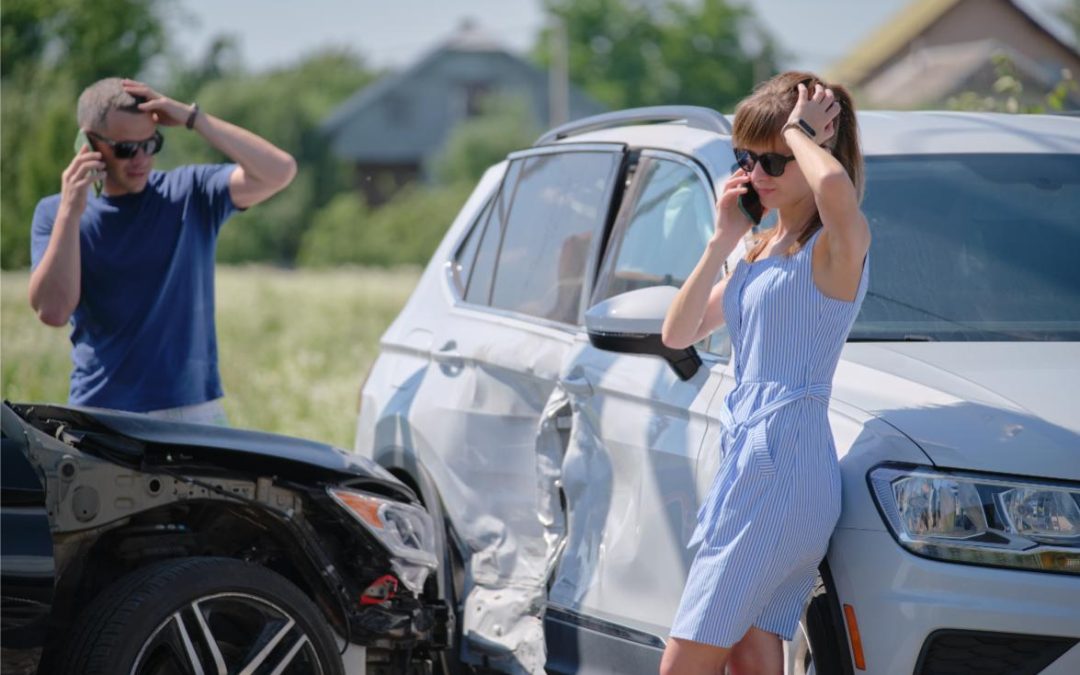
Even if you are uninjured, you may find it difficult to gather your thoughts immediately after a car accident. Take a deep breath, and focus. Following the right steps at the scene of the accident will help you keep safe. It will also put you in a better position if you decide to file an insurance claim or lawsuit later on.
Here are the right steps.
Remain at the Scene
Remaining at the scene of an accident is necessary. Iowa state law requires the other driver to provide you with their name, address, and vehicle registration number; this goes both ways, even if you believe you aren’t at fault for the accident. An individual can receive a simple misdemeanor for leaving the scene of an accident before this information is exchanged.
Inspect for Injuries
Check yourself and all of your passengers for injuries. If you are safe and able to, check the other vehicle’s driver and passengers as well. Do not attempt to provide aid that exceeds your medical training. Do not move an injured person, unless their present location puts them at immediate risk of further harm.
Any injury warrants a 911 call, even if the injury is (A) not apparently severe, or (B) not apparent to anyone other than the person claiming to have it. If you’re unsure whether to call 911 or not, err on the side of caution. Call anyway. An injury that appears small at first glance could require extensive medical treatment.
Call the Police
If you decide to call 911, call the police as well. But even if no one is injured, calling the police might still be the right move. In Iowa, a driver involved in an accident causing property damage of $1,500 or more should report it to the nearest law enforcement agency for official investigation (or, barring that, file an Iowa Accident Report within 72 hours of the incident). Failure to do so may result in suspension of their license.
Having police at the scene of an accident can help you in multiple ways. Their flashing lights slow oncoming traffic. They will help control the other driver if they are intoxicated or aggressive. They will also produce a report that can prove valuable to any insurance claim or lawsuit you might subsequently file. Request the responding officer’s name and badge number for this reason, as well as the report number if available.
Move Vehicle
Iowa state law requires the owner of a damaged vehicle to remove it from the traveled portion of the roadway, so long as it is safe and possible. Doing so makes first responders’ jobs easier, and also reduces the risk of additional accidents.
Exchange Information
As noted earlier, state law obligates drivers to exchange information at the scene of an accident. Iowa state law also requires drivers to carry minimum liability coverage. That is why you should also request the other driver’s auto insurance provider and policy number. (Note that a policy number may be up to 13 digits long. Avoid transcription errors by taking a photo of the other driver’s insurance card, as well as their driver’s license.)
Do not say too much to the other driver during the exchange, as your words can be used against you. Any admission of fault can be construed as acceptance of liability for the accident.
Gather Evidence
Don’t worry about gathering information that may not prove useful at a later time. Play it safe, and record any detail you suspect might be pertinent to the situation.
Photograph several angles of all vehicles involved in the accident, including their license plates. Also photograph salient features of the surrounding area: traffic lights, road signs, skid marks, other property damage, etc.
Are security and/or doorbell cameras facing the scene of the accident, or areas leading up to it? Note their locations, as the cameras’ video footage may be requested from their owners.
Were witnesses present at the scene and time of the accident? Request and save their contact information as well.
Write Down What Happened
Photographic evidence is important. So too is your written account of what transpired before, during and immediately following the accident. Note the date, time, and exact location of the collision; the speed and direction you were driving; and what the other driver appeared to be doing prior to and during the accident.
Engage Your Insurance Provider
Even if you were responsible for the accident, report it to your car insurance company (or your insurance agent if they are available). Be cooperative with your insurance company. Answer their questions truthfully, and provide any evidence you gathered along with your written statement.
Reporting to your insurance provider does not obligate you to file a claim. If you are unsure whether to file a claim – or feel that your claim was unfairly denied – then you may discuss your available options with your attorney. Engaging an attorney early on can help prevent you from saying something that could jeopardize your claim.
Record Everything
Keep a detailed record of all accident-related losses, such as medical treatment and vehicle repairs you pay for. Keep a journal of any pain and/or suffering you experience as the direct result of the accident. Save any correspondence (e.g. text and emails) in which you discuss the accident, and make a note of whom you discuss the accident with and when. These records will prove invaluable should you ultimately decide to file a claim or lawsuit.
Speak With an Attorney
Did the accident cause serious injury or property damage? Then you shouldn’t sign anything provided by the other driver’s insurance company or lawyer until you have spoken with your own attorney. Hiring an attorney also substantially increases your odds of receiving fair compensation for your own damages.
You never want to be involved in a car accident. No one does, although that doesn’t stop over 50,000 crashes from occurring in Iowa each year. Prepare yourself for a worst case scenario. Contact The Hoffman Agency today for the auto insurance policy that best fits your needs!