
Understanding the Risks of Stopped Vehicles on Icy Iowa Roads
When the snow flies and the temperatures drop, the simple act of driving in Iowa becomes significantly more challenging. While we all know to prepare for slick roads and reduced visibility, the dangers posed by stopped or slow-moving vehicles on the side of the road are drastically amplified in winter.
Whether it’s a DOT plow clearing drifts, a utility crew fixing a line downed by ice, or a tow truck assisting a stranded driver, these essential individuals are often working just feet from fast-moving traffic. In blinding snow or on icy pavement, the margin for error shrinks to near zero.
As your local safety partner, The Hoffman Agency wants to ensure every driver understands the critical awareness needed to protect these essential workers and themselves. Driving safely around these roadside operations is not just courtesy; it’s a legal obligation and a vital part of protecting your Automobile Insurance record.
Iowa’s Move Over Law: Your Legal Requirement, Enhanced by Winter Conditions
Iowa has a strong Move Over Law designed to protect people working on or near the shoulder of the highway. This law mandates specific actions when you approach a vehicle displaying flashing lights. In winter conditions, compliance with this law is even more critical, as is ensuring you execute the maneuver safely.
- Change Lanes: If you are driving on a multi-lane roadway, you must safely move to a lane farther away from the stopped vehicle, if possible. On icy roads, ensure you are not making an abrupt lane change that could cause you to lose control.
- Slow Down: If changing lanes is unsafe or impossible (such as on a two-lane road), you must slow down to a speed that is reasonable and prudent given the situation. In heavy snow or on ice, this means a significant reduction in speed to maintain traction.
This law applies to official vehicles like police cars, fire trucks, and ambulances, but also to tow trucks, roadside assistance vehicles, and maintenance or utility vehicles using flashing lights. Ignoring this law can result in stiff fines and, more importantly, put lives at risk.
Visibility & Traction Hazards: The Winter Double Threat
Winter introduces a brutal double threat: reduced visibility and poor traction. This makes the job of construction, utility, and towing crews much more dangerous and their presence on the side of the road much harder for you to notice.
- Reduced Visibility: Snow, fog, and the low angle of the winter sun can hide roadside vehicles until you are dangerously close. A utility truck’s flashing lights can be easily obscured by a whiteout or snow spray from other vehicles.
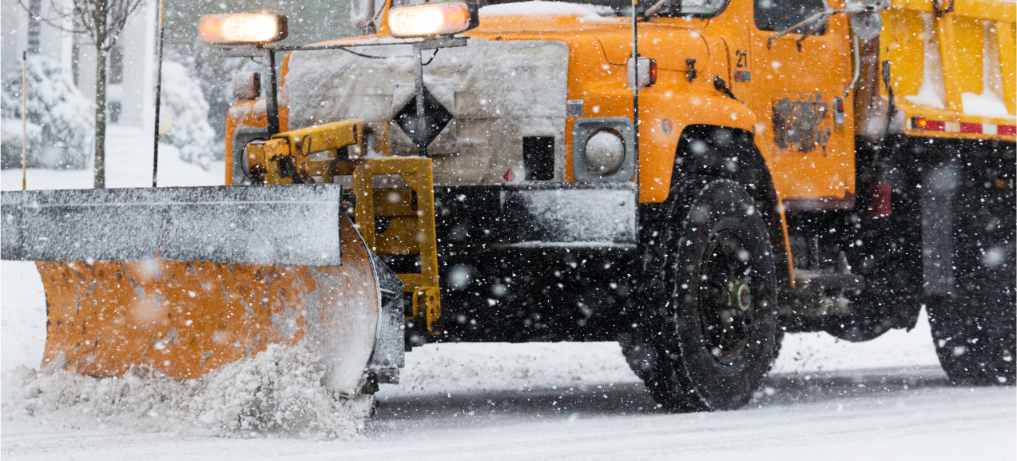
- DOT and Plow Crews: Be especially cautious around Iowa DOT vehicles and snowplows. They often move slow, stop unexpectedly, or work in convoys. Never pass a plow on the right when it is operating, and give them ample space.
- Icy Shoulders and Lane Drops: Roadside workers are often near the edge of the pavement, which is frequently covered in ice, packed snow, or slush. When you move over or pass, be acutely aware of where the driveable lane ends and the slick shoulder begins.
Protecting Yourself and Your Insurance Record
A winter collision—especially one involving a stopped vehicle—often results in a fault determination against the moving driver due to speed or failure to maintain control. Maintaining a clean driving record is key to keeping your Automobile Insurance rates manageable.
Here are three steps to minimize your risk when approaching roadside activity in the winter:
- Reduce Distractions & Increase Vigilance: In adverse conditions, all roadside activity demands 100% of your focus. Put your phone away. Constantly scan for flashing lights, slow-moving vehicles, and people.
- Increase Following Distance Exponentially: Braking distances on ice and snow can be ten times greater than on dry pavement. If a vehicle ahead slows for a roadside hazard, maintain a massive buffer. Brake early and gently.
- Anticipate the Hazard: When you see flashing amber lights or a tow truck’s hazard lights, assume the worst. Slow down well in advance, check your mirrors, and look for a safe opportunity to move over without making any sudden movements that could cause you to skid.
At The Hoffman Agency, we urge you to be the most observant and cautious driver on the road this winter. By following the Move Over Law and dedicating your full attention to these roadside hazards, you help protect those working to keep our communities safe and functional.
If you ever need assistance with a claim or want to review your current policy to ensure you have the right protection for these challenging months, please Contact the Hoffman Agency today for superior personal service.